 +1 (586) 264-2000


Understanding Holistic Dental Care
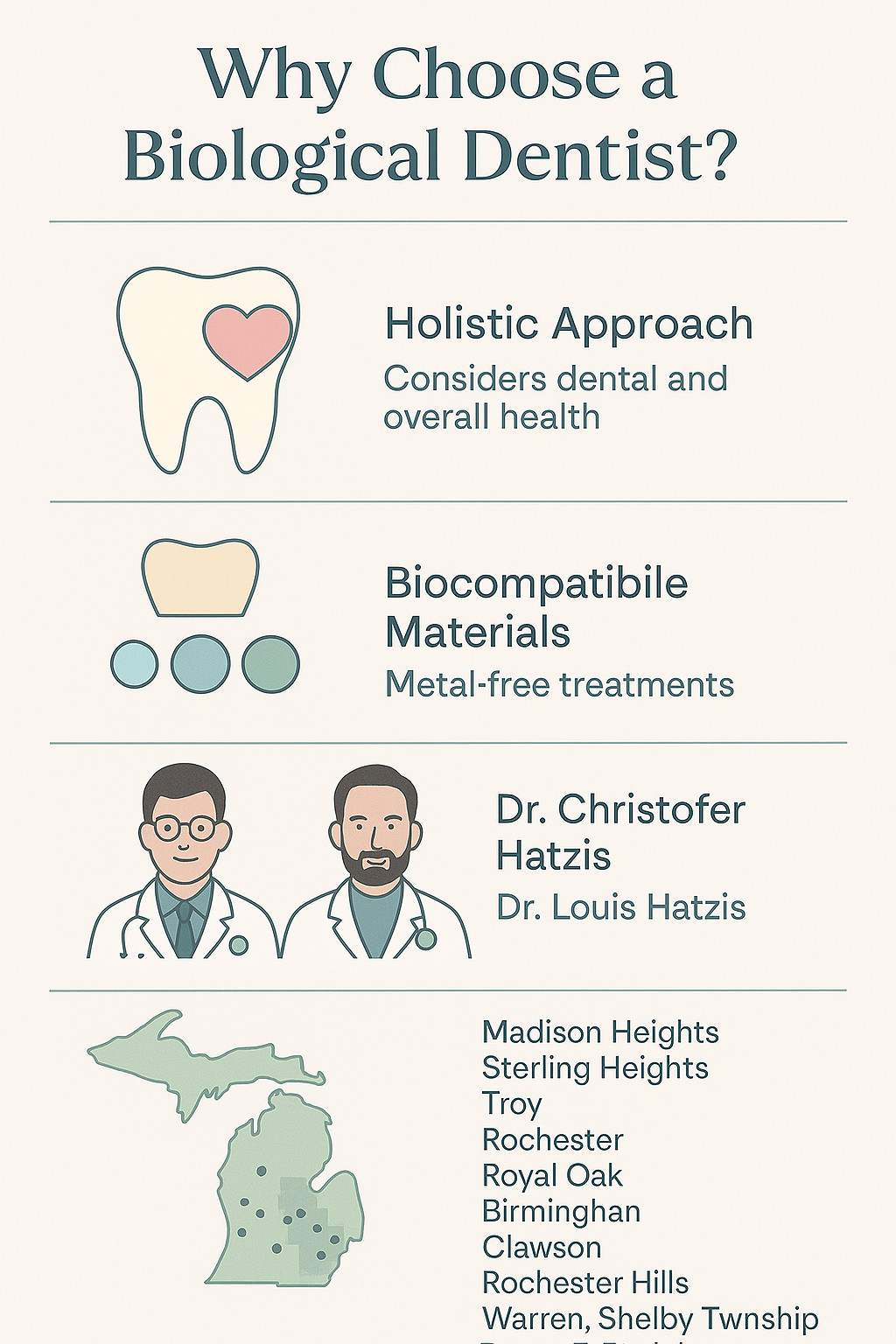
Biological dentistry, sometimes called holistic or biocompatible dentistry, is an approach to dental care that considers not only the condition of the teeth and gums, but also the materials and techniques used during treatment. It places particular attention on material selection, preserving healthy tooth structure, reducing unnecessary exposures, and tailoring treatment to the individual patient.
At Byond Dental, these principles help guide how we evaluate treatment options and dental materials. If you’re looking for information about our specific treatments and approach, explore our Biological Dentistry services.
Looking for treatment information? Explore our Biological Dentistry services at Byond Dental.
What Makes Biological Dentistry Different from Traditional Dentistry?
Biological dentistry uses many of the same established diagnostic and restorative principles as conventional dentistry, but places additional consideration on how dental materials, treatment techniques, and existing restorations may affect the individual patient. Rather than defining a completely separate type of dentistry, it reflects a different philosophy in how treatment options are evaluated and selected.
Some of the considerations that may receive greater attention in a biological approach include:
- Material compatibility — considering the materials used for restorations, implants, and other dental treatments.
- Conservation of tooth structure — preserving as much healthy natural tooth structure as clinically possible.
- Exposure reduction — taking precautions when removing or replacing certain existing dental materials.
- Individualized treatment planning — evaluating options based on the patient’s dental condition, history, and treatment goals.
- Oral-systemic considerations — recognizing that oral health is one component of overall health.
What Do Biological Dentists Do Differently?
In practice, biological dentists may take additional factors into account when evaluating a patient’s oral health and treatment options. This can include reviewing existing dental materials and restorations, evaluating the condition of surrounding bone and soft tissues, and discussing a patient’s dental and medical history before recommending treatment.
Depending on the patient’s needs, a biological dental evaluation may consider:
- Existing fillings, crowns, implants, and other dental materials
- The health of the gums, bone, and surrounding tissues
- Signs of infection or inflammation
- Bite, function, and preservation of natural tooth structure
- Available restorative materials and treatment alternatives
- The patient’s individual concerns, preferences, and health history
The goal is to gather a more complete picture before determining which treatment approach is appropriate for the individual patient.
Why Patients Explore Biological Dentistry
People become interested in biological dentistry for many different reasons. Some are researching the materials already present in their mouths, while others are looking for alternatives for future dental treatment. Patients may also have questions about amalgam fillings, metal-free restorations, dental implants, or how their oral health fits into their broader health goals.
Common reasons why patients explore this approach include:
- Concerns about existing dental materials
- Interest in metal-free restorative options
- Questions about mercury amalgam fillings and their removal
- A desire to preserve natural teeth whenever possible
- Interest in ceramic dental implants
- A preference for more individualized treatment discussions
Biological dentistry supports healing through a whole-body lens — reducing risks from dental toxins and placing emphasis on prevention.
What Principles Guide Biological Dentistry?
Biological dentistry is guided by principles that influence how treatment options, materials, and procedures are considered. While the specific approach varies by dentist and patient, the focus is often on making thoughtful treatment decisions while preserving oral health and function.
At Byond Dental, we serve patients across Metro Detroit — including Sterling Heights, Madison Heights, Birmingham, Royal Oak, Troy, Bloomfield Hills, and beyond. Our focus is always on:
- Prevention first — identifying and addressing dental concerns before they become more complex.
- Preservation — maintaining healthy natural tooth structure whenever clinically possible.
- Thoughtful material selection — considering the properties and suitability of materials used in dental treatment.
- Responsible treatment planning — weighing the benefits, limitations, and alternatives of available procedures.
- Patient participation — helping patients understand their options so they can make informed decisions about their care.
Are Amalgam Fillings Safe? What the Research Says
Dental amalgam, often called “silver fillings,” contains approximately 50% elemental mercury by weight. While still used in some conventional practices, growing evidence points to potential health risks associated with mercury vapor released from these fillings.
According to a peer-reviewed study published by the National Library of Medicine, mercury from dental amalgam can accumulate in vital organs like the brain, kidneys, and liver, and may cross the placental barrier, affecting unborn babies.
Another study in the Journal of Occupational Health found significantly higher levels of mercury in the urine of patients with amalgam fillings, especially those with multiple or defective restorations.
💡 At Byond Dental, we follow SMART-certified protocols to safely remove amalgam fillings and replace them with biocompatible alternatives that support your body’s health — not compromise it.
Mercury exposure from dental amalgam restorations has been shown to contribute to systemic mercury levels. See this peer-reviewed study published in Environmental Health.
 English
 Portuguese