 +1 (586) 264-2000


Biological Dentistry in Sterling and Madison Heights, MI
Byond Dental is a biological dental practice with offices in Sterling Heights and Madison Heights, serving patients across Metro Detroit. We use biocompatible, metal-free materials, SMART-certified mercury removal and biomimetic techniques that preserve your natural teeth, so your dental care supports your whole-body health.
What Makes Biological Dentistry Unique?
Biological dentistry focuses on using biocompatible materials and techniques that support your overall health. Furthermore, by avoiding toxins and preserving natural teeth, this holistic approach promotes long-term wellness for both you and your family.
At Byond Dental, we view the mouth as an integral part of your overall health. Unlike conventional dentistry, our treatments are designed to minimize toxicity, promote natural healing, and mimic nature’s design—all while prioritizing prevention and evidence-based care.
Our practice stands out with advanced techniques and certifications, including the IAOMT’s SMART protocol for safe mercury filling removal, ozone (activated oxygen) therapy, metal-free ceramic implants, platelet-rich fibrin (PRF), 3D CBCT imaging, digital radiographs and oral health scanning. Every treatment plan is tailored to your health goals.
New to biological dentistry? Here’s how our approach works.

Our Process
What to Expect at Your First Biological Dental Visit
Your first visit at Byond Dental is a thorough 90-minute exam, not a quick check-up. We look at your mouth as part of your whole body, using 3D imaging and a detailed health history to find the root cause of problems, not just the symptoms.
Here’s how it works, step by step.


Your Biological Dentist
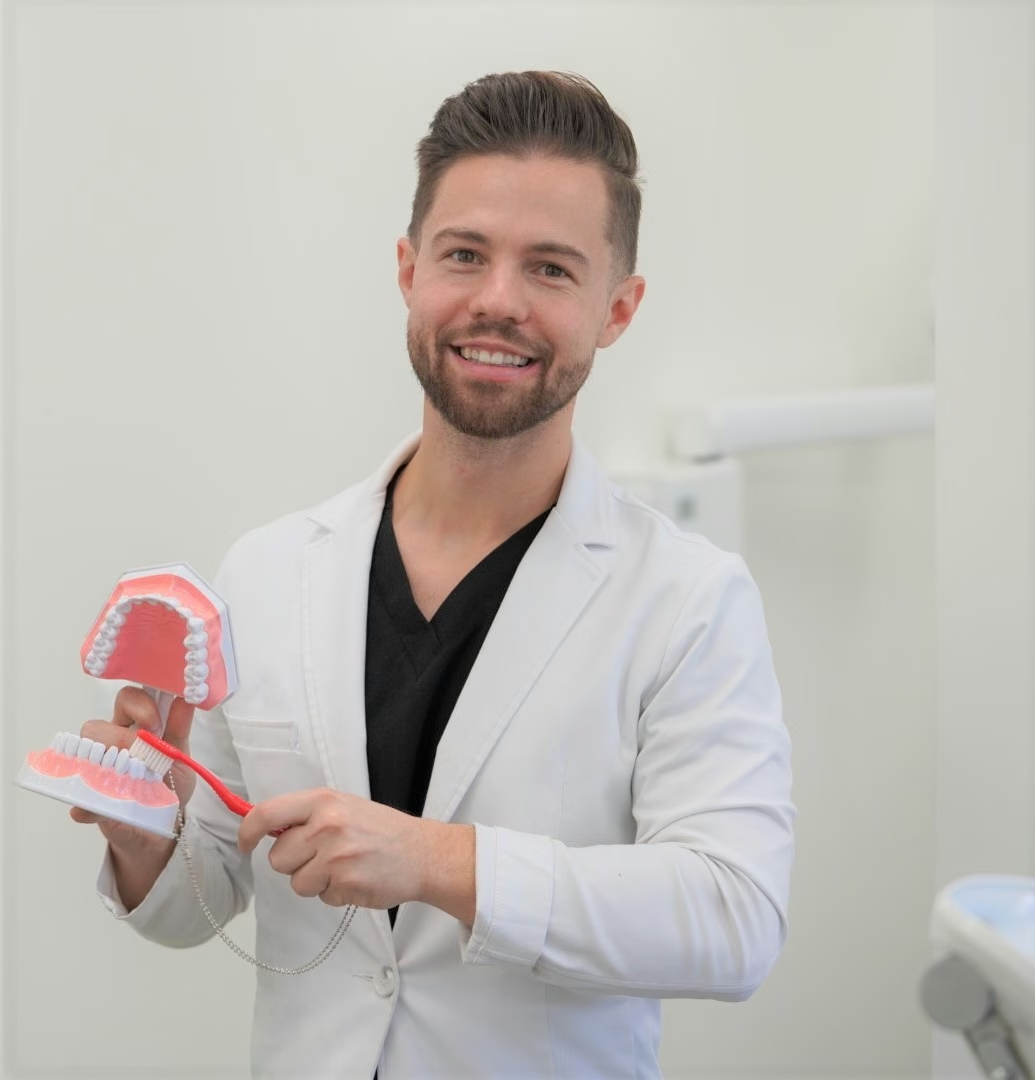
Dr. Christofer Hatzis is a biological dentist serving patients in Sterling Heights, Madison Heights and across Metro Detroit. If you’re new to the term, biological dentistry simply means treating your mouth as part of your whole body: choosing safe, metal-free materials, preserving as much of your natural teeth as possible and avoiding anything your body doesn’t need.
His path began early. While still in university, Dr. Hatzis was mentored by Dr. Silvano Senn and Dr. Toni Mann, who introduced him to dentistry that supports whole-body health rather than compromising it. Their guidance shaped his career.
After graduating from the UCSF School of Dentistry, he trained with Swiss Dental Solutions in ceramic implants, became certified in the IAOMT’s SMART protocol for safe mercury filling removal, and built Byond Dental so patients wouldn’t have to search across the country for this kind of care. A lifelong student, he reads the latest research and takes advanced courses year-round, because he believes the best dentist never stops learning. For you, that means modern, thoughtful care chosen with your whole-body health in mind.
Biological Dentistry FAQs
Below are some of the most common questions we receive about Biological Dentistry.
What is a biological dentist, and how is it different from a regular dentist?
A biological dentist treats your mouth as part of your whole body. At Byond Dental, we use biocompatible, metal-free materials, follow the IAOMT’s SMART protocol for safe mercury filling removal and focus on preserving your natural teeth. A conventional dentist may choose materials mainly for durability and cost; we also consider how each material affects your overall health.
Is holistic dentistry the same as biological dentistry?
Holistic and biological dentistry share a similar philosophy, emphasizing the connection between oral health and overall well-being. However, biological dentistry goes further by following science-backed protocols — such as SMART-certified mercury removal and the use of biocompatible, non-toxic materials.
At Byond Dental, we don’t rely on philosophy alone — we follow evidence-based practices that prioritize your long-term health.
Does Byond Dental use ozone therapy in treatments?
Yes. At Byond Dental, we use medical ozone (activated oxygen) as a natural disinfectant across many biological treatments, including cleanings, fillings and surgical procedures. It can be applied as a rinse or irrigant to clean infected tissue and reduce bacteria, used beneath the gums to help treat periodontal infections, and applied to root surfaces to help reduce sensitivity. Ozone lets us support healing while minimizing the need for harsh chemicals, in line with our commitment to safe, science-backed biological care. Learn how we use ozone therapy in dentistry.
Should I remove my root canal treated tooth?
Not automatically. A root canal removes infected nerve tissue and bacteria from inside a tooth and seals it. When it works, the tooth can stay healthy for years. But root canal-treated teeth can become re-infected, since the tiny canals inside a tooth are difficult to clean completely.
That’s why we evaluate every root canal-treated tooth with 3D CBCT imaging, which can reveal infection that standard X-rays miss. If the tooth is healthy, keeping it may be best. If it’s re-infected, removal is often the healthiest option, and we’ll explain every choice, including metal-free ceramic implants, so you can decide with full information.
Should I remove my mercury fillings?
This is a great question because we get it so often.
Not every amalgam filling needs to be replaced right away. We look at whether a filling is cracked, leaking or failing, and at your health goals. When removal makes sense, we follow the IAOMT’s SMART protocol, using isolation, high-volume suction and air filtration to protect you during the process. Learn more about safe mercury filling removal.
Does your composite have BPA in it?
Like most dental composites, the composites we use are made with resins derived from BPA, though they’re not made with free BPA itself. If you’d prefer to avoid BPA entirely, we offer ceramic restorations, including e.max (lithium disilicate) and other all-ceramic options, which are completely BPA-free and contain no resin at all.
Ceramic restorations are typically more involved than a composite filling, so costs vary depending on the tooth and the type of restoration. We’ll walk you through every option and its cost before any treatment begins.
What metal-free options do I have for replacing my missing tooth?
There are two main metal-free options. A porcelain or ceramic bridge fills the gap by attaching to the teeth on either side, which means reshaping those healthy neighboring teeth to hold it. A zirconia (ceramic) implant replaces the missing tooth on its own, without touching any neighboring teeth. Zirconia implants are biocompatible, integrate well with gum tissue and leave no gray shadow at the gumline. Dr. Hatzis trained with Swiss Dental Solutions in ceramic implant placement. Learn about our zirconia implants in Metro Detroit.




 English
 Portuguese